

Don’t let fleas live in your home or yard. Get them off your pets & property with Barrier Pest Services.
Professional Flea Control
Reduce flea activity in your home and yard with professional flea control designed for Lowcountry properties.
Fleas can quickly become a frustrating problem for homeowners and pet owners alike. These small parasites often hide in carpets, furniture, pet bedding and shaded outdoor areas, making them difficult to eliminate without a comprehensive treatment plan. At Barrier Pest Services, we provide professional flea control throughout Charleston, Berkeley and Dorchester Counties.
What Are Fleas?
Fleas are small, wingless insects that survive by feeding on the blood of mammals and birds. The warm, humid conditions common throughout the Lowcountry allow flea populations to remain active for much of the year. While fleas are often associated with pets, they can also establish themselves in carpets, furniture, cracks in flooring and outdoor resting areas.
Where Do Fleas Hide?
Fleas seek out protected areas where they can develop and reproduce.
- Indoor soft surfaces: Carpets, rugs and upholstered furniture.
- Pet areas: Bedding, crates and favorite resting spots.
- Structural gaps: Cracks in flooring and along baseboards.
- Outdoor areas: Shaded soil, beneath decks, under porches and in dense vegetation.
- Wildlife travel routes: Areas frequently visited by pets, rodents or other animals.
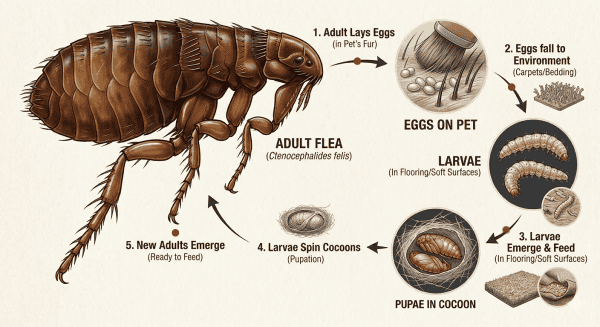
Because fleas develop through multiple life stages, treating pets alone often does not resolve the problem.
Why Fleas Are Common in the Lowcountry
Several factors contribute to flea activity throughout Charleston and the surrounding area.
- Rapid reproduction: Flea populations can grow quickly when conditions are favorable.
- Hidden life stages: Eggs and larvae often develop deep within carpet fibers, pet bedding and other protected areas.
- Dormant pupae: Fleas can remain protected in the pupal stage until conditions are suitable for emergence.
- Warm, humid conditions: The Lowcountry climate supports flea activity for much of the year.
Signs of Flea Activity
- Pet scratching: Excessive scratching, biting or irritated skin.
- Flea dirt: Small dark specks found on pets, bedding or flooring.
- Bites on people: Small, itchy bites commonly found around the ankles and lower legs.
- Visible fleas: Small insects moving through carpets, furniture or pet resting areas.
How to Reduce Flea Activity Around Your Property
Good sanitation and property maintenance can help reduce conditions that support flea populations.
- Vacuum regularly: Remove eggs and developing fleas from carpets and furniture.
- Wash pet bedding: Clean bedding and pet linens regularly using hot water.
- Protect pets: Work with your veterinarian to maintain an appropriate flea prevention program.
- Maintain landscaping: Keep grass trimmed and reduce dense, shaded areas where fleas may develop.
- Limit wildlife activity: Reduce areas where animals may shelter around the property.
While these steps can help reduce flea activity, established infestations often require professional treatment.
Our Approach to Flea Control
Effective flea control focuses on treating the areas where fleas live and develop.
- Property evaluation: We identify areas of flea activity both indoors and outdoors.
- Targeted treatments: Treatments are applied to areas where fleas are most likely to hide and develop.
- Interior and exterior coverage: Treatment plans may address both the home and surrounding yard when needed.
- Prevention recommendations: We provide guidance to help reduce conditions that contribute to recurring flea activity.
- Ongoing service options: Recurring pest control services can help manage flea activity throughout the year.
Professional Flea Control for Homes & Businesses
Barrier Pest Services provides flea control services for residential and commercial properties throughout Charleston, Berkeley and Dorchester Counties. If you are dealing with flea activity in your home or business, our team can inspect the property and recommend an appropriate treatment plan.
Common Flea Questions Homeowners Ask Most
A combination of professional pest control, thorough cleaning, and ongoing preventive measures is often the most effective way to eliminate fleas.
Fleas have a resilient life cycle with multiple stages, making it challenging to eliminate all of them without a comprehensive approach.
Professional services have access to effective treatments and expertise, ensuring thorough and long-lasting flea removal.
Look for signs like excessive itching in pets, small dark insects, and tiny black specks (flea dirt) on bedding and furniture.
The severity of a flea infestation can be determined by examining pet behavior, the number of fleas seen, and the presence of flea dirt.
Yes, vacuuming helps remove dead fleas, eggs, and larvae. Dispose of the vacuum bag or clean the canister afterward.
Fleas can survive indoors during the winter, especially in heated homes. They become less active but can still pose a problem.
Unfortunately, fleas can transmit diseases and cause infections. Dog fleas are also associated with the life cycle of tapeworms, which may also infect children.
Flea eggs and pupae can be resistant to treatment. It may take time for the treatment to eliminate all life stages. Consistent follow-up is essential.
Fleas can enter your home via other animals like rodents or on the clothing of people who have been in infested areas. They can also survive in carpet fibers for a period without a host.